Cloud computing has transformed the way individuals and businesses use technology by providing on-demand access to computing resources over the internet. However, not all cloud environments are the same. Different types of cloud computing are designed to meet various business needs, security requirements, and budgets.
Understanding the different types of cloud computing can help you choose the right solution for personal use, startups, or large enterprises.
What Are the Types of Cloud Computing?
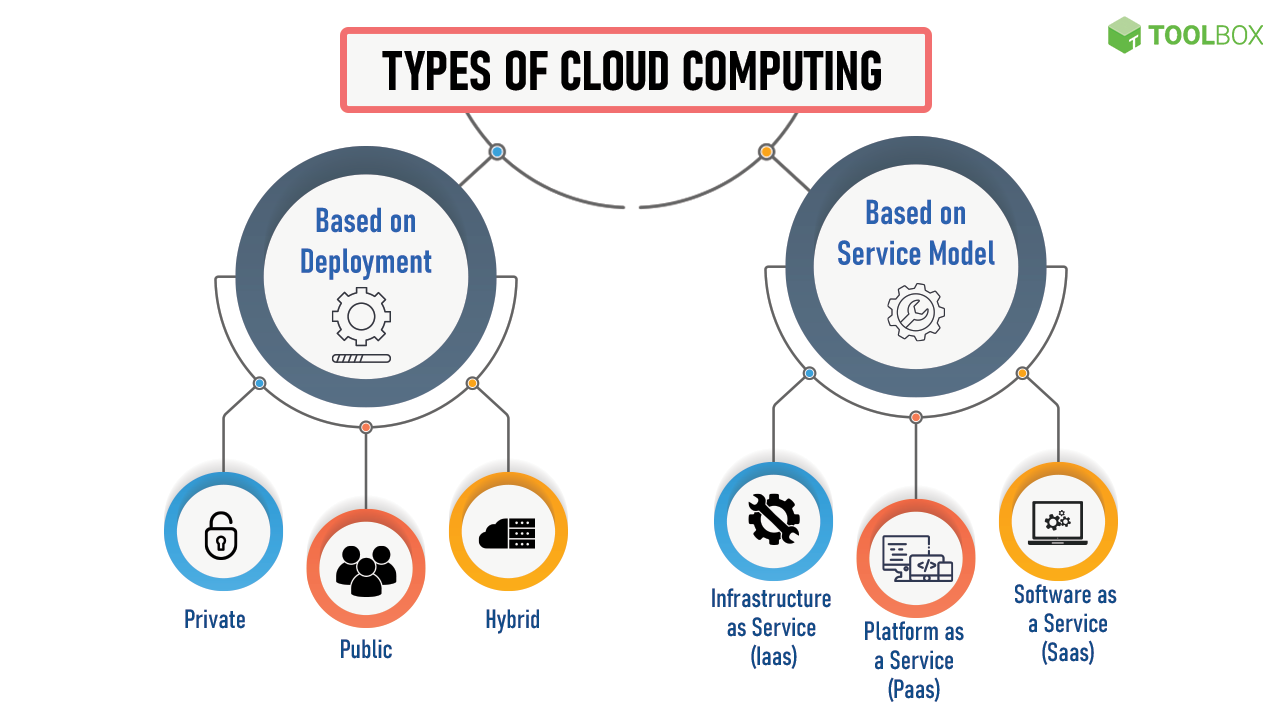
Cloud computing is commonly divided into four deployment models:
- Public Cloud
- Private Cloud
- Hybrid Cloud
- Multi-Cloud
Each model offers unique advantages and is suitable for different use cases.
1. Public Cloud
A public cloud is owned and operated by a third-party cloud service provider. The provider manages the infrastructure, including servers, storage, networking, and security, while multiple customers share the same resources.
Public cloud services are highly scalable, affordable, and easy to deploy, making them a popular choice for startups, small businesses, and individual users.
Advantages of Public Cloud
- Lower infrastructure costs
- Easy to scale resources
- No hardware maintenance
- Fast deployment
- Accessible from anywhere
Best For
- Small businesses
- Startups
- Web applications
- Development and testing
- Personal cloud storage
2. Private Cloud
A private cloud is dedicated to a single organization. Unlike a public cloud, all computing resources are used exclusively by one business, providing greater control, security, and customization.
Private clouds are often hosted in an organization’s own data center or by a third-party provider.
Advantages of Private Cloud
- Enhanced security
- Greater control over resources
- Better compliance with regulations
- Customized infrastructure
- Improved performance for sensitive workloads
Best For
- Financial institutions
- Government agencies
- Healthcare organizations
- Large enterprises
- Businesses handling confidential data
3. Hybrid Cloud
A hybrid cloud combines public and private cloud environments, allowing organizations to use both depending on their needs. Sensitive information can remain in a private cloud, while less critical applications run in the public cloud.
This approach offers flexibility and helps businesses optimize costs without sacrificing security.
Advantages of Hybrid Cloud
- Greater flexibility
- Better resource utilization
- Improved disaster recovery
- Cost optimization
- Stronger data security
Best For
- Growing businesses
- Organizations with seasonal workloads
- Companies requiring both security and scalability
4. Multi-Cloud
A multi-cloud strategy involves using services from two or more cloud providers. Instead of relying on a single vendor, businesses distribute workloads across multiple platforms to improve reliability and reduce dependency on one provider.
For example, a company may use one provider for storage and another for artificial intelligence or analytics.
Advantages of Multi-Cloud
- Reduced vendor lock-in
- Higher reliability
- Better performance
- Access to specialized cloud services
- Improved business continuity
Best For
- Large enterprises
- Global organizations
- Businesses requiring high availability
- Companies with diverse IT needs
Cloud Service Models
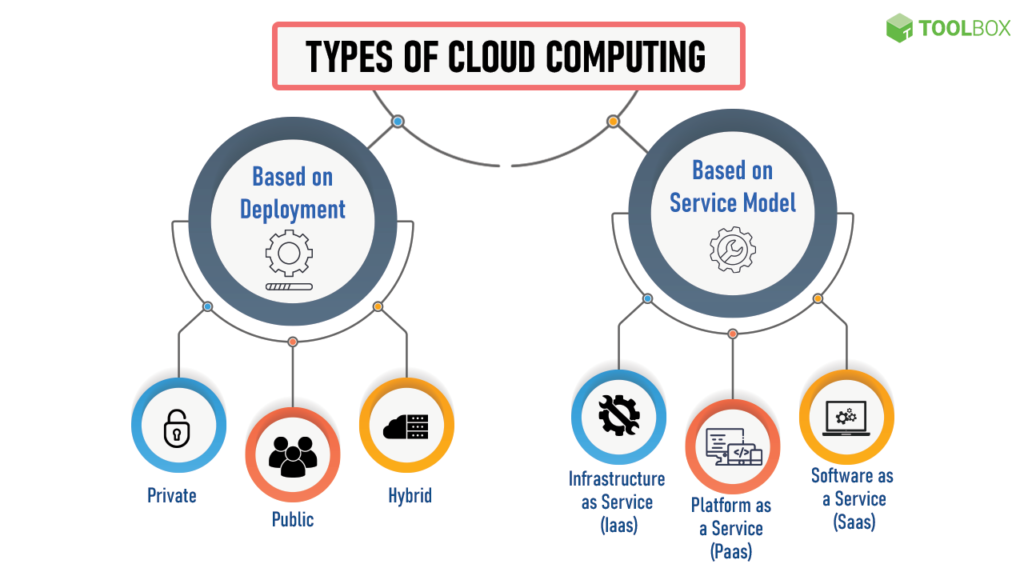
In addition to deployment models, cloud computing also offers three primary service models.
Infrastructure as a Service (IaaS)
IaaS provides virtual servers, storage, networking, and computing resources. Users manage the operating systems and applications while the provider manages the physical infrastructure.
Platform as a Service (PaaS)
PaaS offers a complete development environment where developers can build, test, and deploy applications without managing servers or hardware.
Software as a Service (SaaS)
SaaS delivers software applications through a web browser. Users simply log in and use the software without installing or maintaining it on their devices.
How to Choose the Right Cloud Type
Selecting the right cloud model depends on your specific requirements.
- Choose a Public Cloud if you need a cost-effective and scalable solution.
- Choose a Private Cloud if security and compliance are your highest priorities.
- Choose a Hybrid Cloud if you want the flexibility of combining public and private environments.
- Choose a Multi-Cloud strategy if you want to avoid relying on a single provider and improve resilience.
Carefully evaluating your budget, security needs, workload, and growth plans will help you make the best decision.
Conclusion
Cloud computing offers several deployment models to suit different users and organizations. Public clouds provide affordability and scalability, private clouds focus on security and control, hybrid clouds combine the strengths of both, and multi-cloud strategies deliver flexibility and reliability across multiple providers. Understanding these types of cloud computing allows businesses and individuals to choose the most suitable solution for their current needs while preparing for future growth.