Hybrid cloud is one of the most popular cloud computing models used by modern businesses. It combines the flexibility of a public cloud with the security and control of a private cloud, allowing organizations to take advantage of both environments.
As companies continue their digital transformation, hybrid cloud has become a preferred solution because it offers greater scalability, improved security, and better cost management. In this guide, you’ll learn what a hybrid cloud is, how it works, its benefits, challenges, and common use cases.
What Is a Hybrid Cloud?
A hybrid cloud is a cloud computing environment that combines public cloud services and private cloud infrastructure. These two environments work together, allowing data and applications to move between them securely when needed.
Businesses can store sensitive information in a private cloud while using the public cloud for less critical workloads, additional storage, or increased computing power during busy periods.
This approach provides the best of both worlds—security for critical data and flexibility for growing business needs.
How Does a Hybrid Cloud Work?
A hybrid cloud connects private infrastructure with one or more public cloud platforms through secure networking technologies.
Here’s how it works:
- A business stores confidential data in its private cloud.
- Everyday applications and websites run in the public cloud.
- Secure connections allow data to move between both environments.
- When demand increases, extra workloads can be shifted to the public cloud without affecting performance.
- Once demand decreases, resources can be scaled back to reduce costs.
This ability to share workloads between environments makes hybrid cloud highly flexible and efficient.
Key Components of a Hybrid Cloud
A hybrid cloud environment typically includes:
Public Cloud
The public cloud provides scalable computing resources, storage, and applications managed by a third-party provider. It is ideal for handling changing workloads and reducing infrastructure costs.
Private Cloud
The private cloud stores sensitive business data and mission-critical applications in a dedicated environment with greater security and control.
Secure Network Connection
A secure connection links the public and private cloud environments, enabling safe communication and data transfer.
Cloud Management Tools
Organizations use cloud management platforms to monitor performance, allocate resources, automate tasks, and manage workloads across both environments.
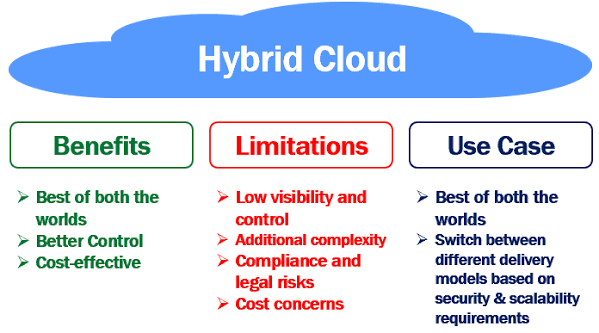
Benefits of Hybrid Cloud
Hybrid cloud offers several advantages for businesses of all sizes.
Improved Security
Sensitive information remains in a private cloud, while less critical applications use public cloud resources. This helps organizations protect confidential data while maintaining flexibility.
Greater Flexibility
Businesses can decide where to run each application based on performance, security, and cost requirements.
Scalability
Hybrid cloud allows organizations to quickly increase computing resources during periods of high demand and reduce them when demand falls.
Cost Efficiency
Companies only pay for additional public cloud resources when needed, reducing the cost of maintaining excess hardware.
Better Business Continuity
Hybrid cloud supports disaster recovery by storing backups across multiple environments. If one system experiences problems, workloads can often continue running in another environment.
Regulatory Compliance
Organizations can keep regulated or sensitive data in private infrastructure while still benefiting from public cloud services for other operations.
Challenges of Hybrid Cloud
Although hybrid cloud offers many benefits, it also presents some challenges.
- More complex infrastructure management
- Higher networking requirements
- Security policies must be consistent across environments
- Data integration can be challenging
- Skilled IT professionals may be required for deployment and maintenance
Proper planning and cloud management tools can help overcome these challenges.
Common Use Cases of Hybrid Cloud
Hybrid cloud is widely used across many industries.
Healthcare
Hospitals store patient records in private clouds while using public cloud services for scheduling systems and analytics.
Financial Services
Banks protect confidential customer information in private environments while running customer-facing applications in the public cloud.
E-commerce
Online retailers use hybrid cloud to handle increased website traffic during sales events without investing in permanent infrastructure.
Education
Universities securely store student records while delivering online learning platforms through public cloud services.
Software Development
Development teams test applications in the public cloud while keeping production systems and sensitive business data in private environments.
Hybrid Cloud vs Public Cloud
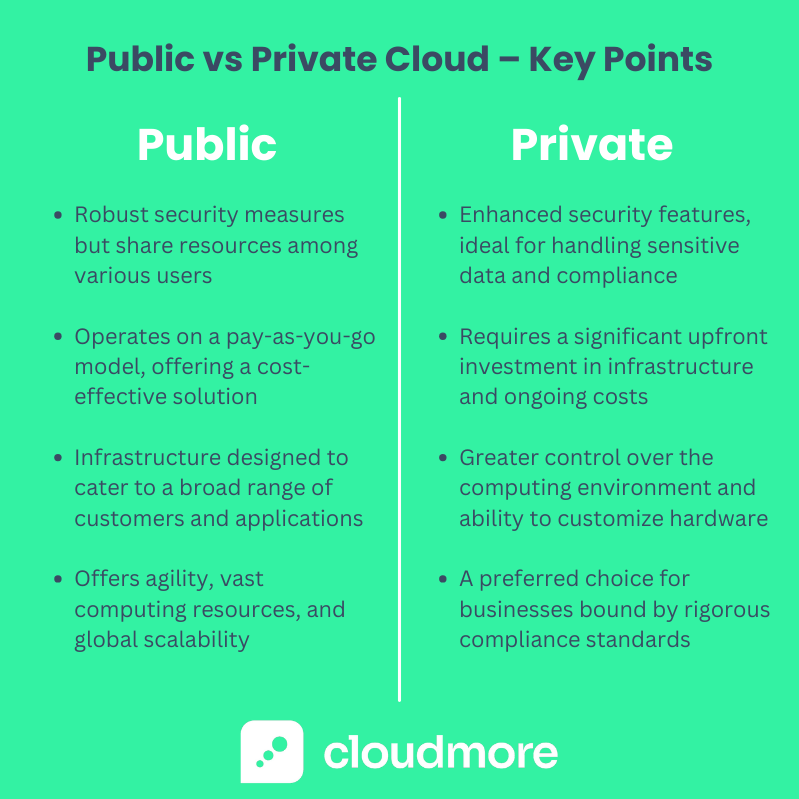
A public cloud uses shared infrastructure managed entirely by a cloud provider, making it affordable and highly scalable. A hybrid cloud combines public and private environments, offering greater control and enhanced security while maintaining flexibility.
Organizations that require both scalability and strict data protection often choose a hybrid cloud solution.
Is Hybrid Cloud Right for Your Business?
Hybrid cloud is an excellent choice if your organization:
- Handles sensitive customer or business data.
- Needs to meet regulatory compliance requirements.
- Experiences seasonal or unpredictable workloads.
- Wants to reduce infrastructure costs.
- Plans to modernize existing IT systems gradually.
Small businesses, large enterprises, and government organizations can all benefit from a well-designed hybrid cloud strategy.
Conclusion
A hybrid cloud combines the strengths of public and private cloud computing, offering businesses the flexibility to scale resources while maintaining strong security for sensitive data. By allowing workloads to move between cloud environments, hybrid cloud helps organizations improve performance, reduce costs, and support long-term growth. As digital transformation continues, hybrid cloud remains one of the most practical and widely adopted cloud computing solutions for businesses around the world.